
Service
Would you like to learn more?

Customer service is extremely important in many companies. This is because it is not only the initial sale of goods that is decisive for customer satisfaction and thus for future sales potential, but also the service provided. This statement is supported by the so-called service recovery paradox, which states that customers whose problems have been well resolved by the provider are more satisfied than customers who have never had a reason to complain. Consequently, entrepreneurs should be very interested in designing well-thought-out service processes and mapping them systematically in a targeted manner. SAP provides the service module for this purpose. In this context, customer service is mapped as a three-step process. The first step in the service process is the initial contact from the customer. For example, the customer contacts the provider with the information that a machine is defective. The service representative records this information in a structured manner, collects relevant information, and initiates further steps. This interaction takes place in Service Cloud V2. The second step is service processing. This is where service contracts are maintained, service orders are created, and customer returns are processed. This is also where service feedback is later entered and, finally, the customer is billed. The third step is field service. If service technicians need to perform repairs, installations, or maintenance at the customer's site, resource planning can be carried out in SAP Field Service Management, or FSM for short. After approval, the service technician receives the order on their mobile device and can perform the service on site.
Learn more about the three stages of service processing with SAP below and create added value for your company:

Service processing in companies – both small local service providers and large corporations – is undoubtedly a major challenge. Every day, numerous service requests from a wide variety of channels must be coordinated, delegated, analyzed, and ultimately completed. A workspace that allows this to be done efficiently not only makes everyday work much easier for service employees, but also saves the company money.
The game changer in service: SAP Service Cloud V2 is an intelligent customer service platform that adapts to your needs. Discover the comprehensive benefits of this innovative solution from SAP and optimize your own service business.
Record customer inquiries about service requests and process them as follow-up documents via service offers or service orders. Plan additional spare parts and services in the service order or use automatic service contract determination to take into account predefined contract conditions for the respective service call. The service technician confirms the services and spare parts offered via service feedback. The hours booked and materials used are then checked, approved, and can be invoiced to the customer via SD integration.
Workshop repair represents the new workshop repair process in SAP S/4HANA and offers you the following functionalities:
While extended returns are used to handle complex return processes, workshop repairs are a leaner option for collecting material from customers, processing it, and ultimately delivering it back. A repair order can be created specifically for certain customer equipment, which is clearly identified by the assigned serial number. This allows employees to call up the history and status of the returned goods at any time and thus obtain valuable information. The next step is to record the goods receipt. This is done without valuation. After all, the material is still the property of the customer. At this point, preliminary checks can be carried out. The employee in the goods receiving department can decide whether the goods should remain at the factory for repair or be returned to the customer, for example, because repair is not possible or there is no defect after all. If a decision is made to repair, a diagnosis of the defect can be carried out. The repair can then be planned based on a specific error pattern. Here, certain components required for the repair can be added, which can trigger a procurement process upon approval. If necessary, a quote can be sent to the customer based on the repair plan. If this is accepted, the repair can begin. Feedback on time and materials is provided at the item level. Subsequent billing to customers can be based on actual costs or at a fixed price. Throughout the entire process, the “Repair Objects” tab shows the current status of the equipment to be repaired.
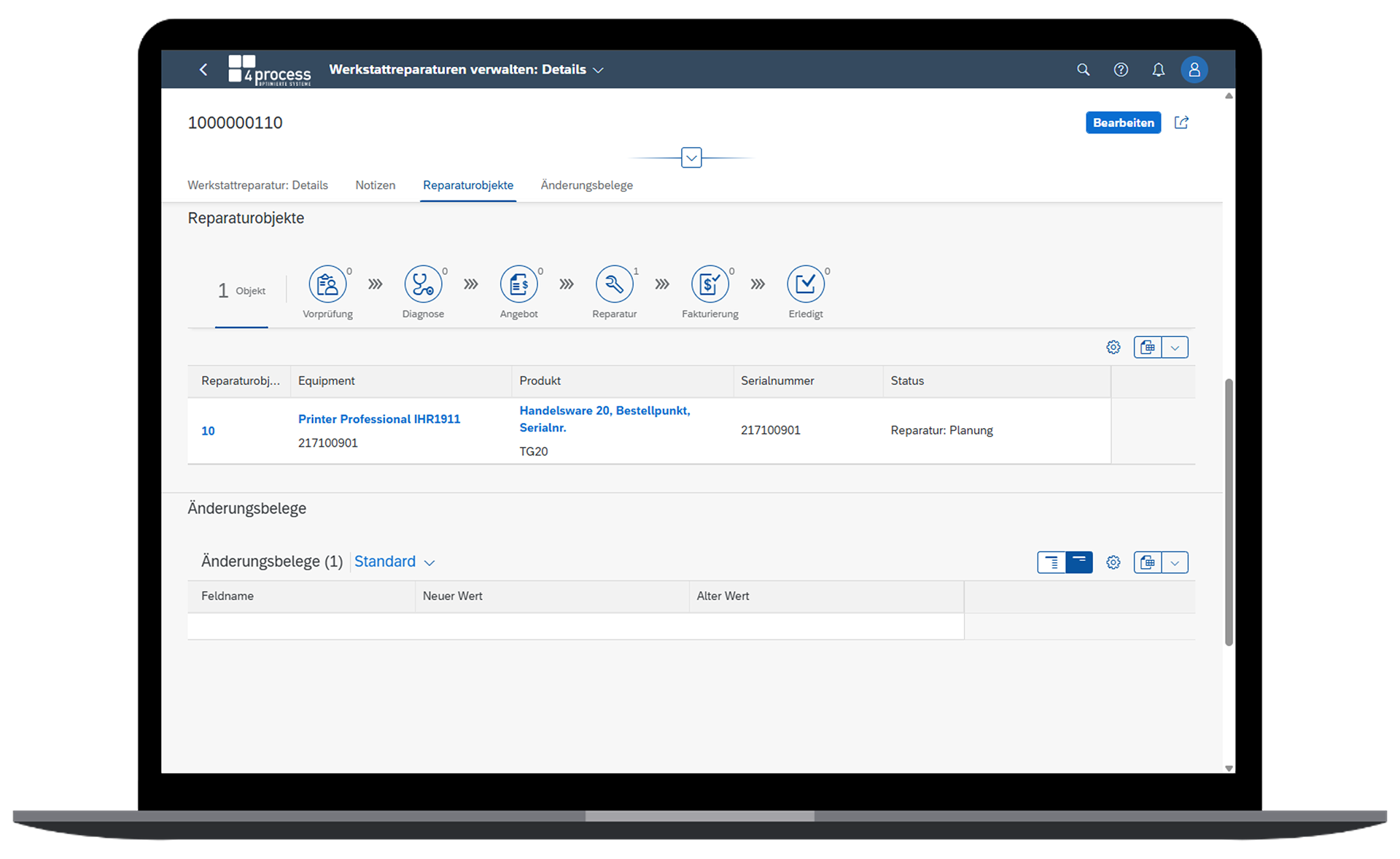
Ultimately, workshop repair offers you a streamlined and intuitive way to plan and execute repairs of serialized materials. In addition, the direct link to the procurement process creates significant added value. An optimized repair process will not only noticeably increase customer satisfaction, but also employee satisfaction.
Use service contracts as a framework agreement to define specific services that will be offered to your customers over a certain period of time. Billing is carried out via a periodic invoicing plan, whereby customer-specific price adjustments can also be implemented. Expiring contracts can also be renewed automatically or manually. Integration into service orders makes it possible to directly take into account the price details stored in the contract when processing service calls.
Define product package templates that you can integrate into S/4HANA solution offers or use individually in other service orders. You can combine different items and services within these packages using different item types. If one of your customers accepts one of your solution offers and product packages, the necessary follow-up documents for further order processing are generated automatically.
SAP's enhanced returns processing offers companies a powerful way to structure and streamline service processes related to returns. It supports a wide range of scenarios – from defective products and incorrect deliveries to goodwill cases – and enables end-to-end processing within a central document. At the heart of the process is the extended returns order, which serves as the starting point for all further activities. Here, the returned material is recorded and follow-up actions such as goods receipt, repair, replacement delivery, or credit memo are planned. The solution allows these steps to be flexibly combined and dynamically adjusted as needed, for example, if the condition of the material after inspection turns out to be different than initially assumed.
A particular added value lies in the consistent clarity: all relevant documents and process steps can be viewed centrally and are directly linked to each other. This allows service employees to track the status of a process at any time, see which actions have already been taken, and determine which steps are next. This reduces sources of error and increases processing speed.
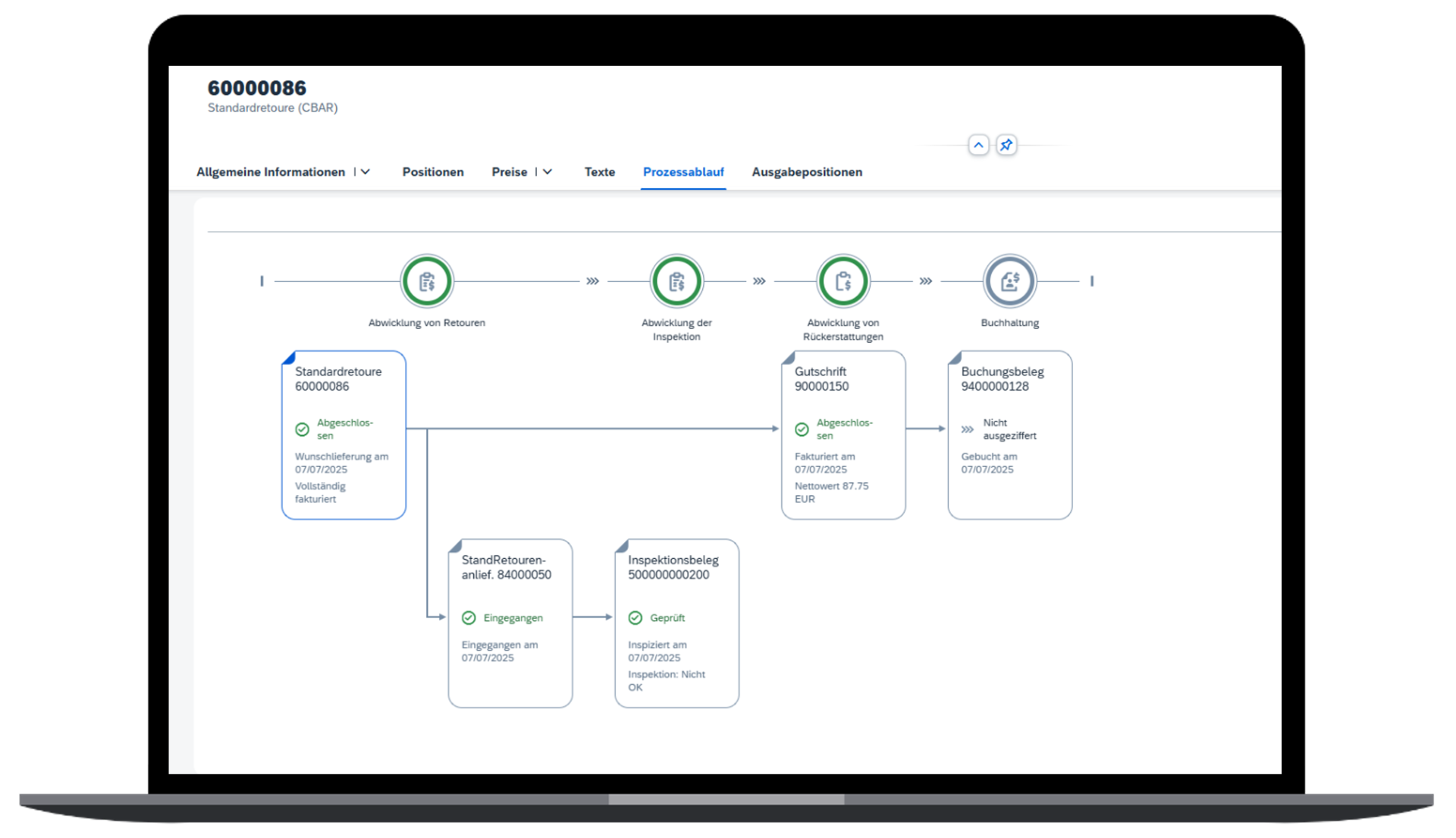
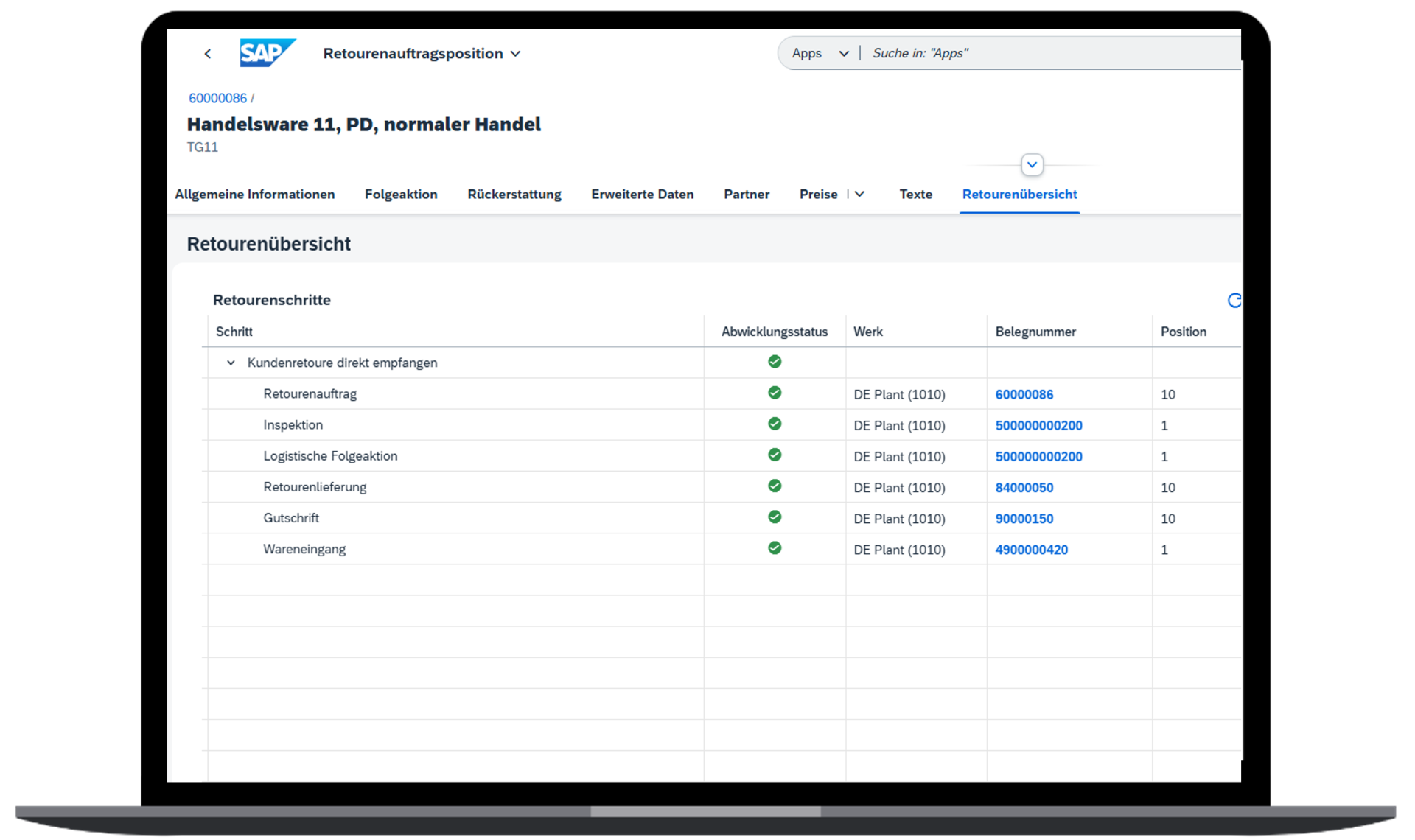
Integrated material inspection in the warehouse is another key component. It enables a thorough evaluation of the returned product and forms the basis for deciding on further measures. Depending on the result, processes such as repair, return to the customer, or transfer to inventory can be initiated. Refunds can also be flexibly managed, either as a credit note or as a replacement delivery. When the return order is saved, relevant follow-up documents such as return deliveries or workshop orders are created automatically. These can also be accessed via the returns overview and processed further there. This creates a consistent, transparent document flow that not only increases efficiency but also improves customer satisfaction.
SAP's enhanced returns solution is included in the standard version and offers a high degree of flexibility that is often underestimated. It helps to optimize service processes holistically, avoid errors, and significantly simplify processing. It therefore offers real added value for companies that want to manage their returns professionally.
The historical traceability of delivery statuses for serialized products poses major challenges for manufacturing companies that also offer services for these products. It is important to maintain this as-built information in a structured manner in order to ensure optimal scheduling of the necessary spare parts and company resources for repairs. Use our approach to planning repair parts lists to ensure fast repair turnaround times.
There are two fundamentally different approaches to service. On the one hand, there is reactive service. A typical scenario for this is the failure of a machine in a customer's production facility. The customer then contacts the manufacturer or service partner, who responds to the malfunction accordingly. A one-time service order is created, and the malfunction is rectified during its processing. On the other hand, there is the proactive approach. This basically involves identifying and rectifying faults before they become apparent and cause costs, for example through production downtime. This is usually achieved through recurring services. Such recurring services are often offered as part of product sales. Service-oriented companies in particular can thus exploit existing upselling potential and generate additional revenue. In addition to consistent revenue, you benefit from increased customer loyalty. This is usually accompanied by increased customer satisfaction, as the ongoing functionality of purchased machines is ensured and high costs due to downtime are avoided.
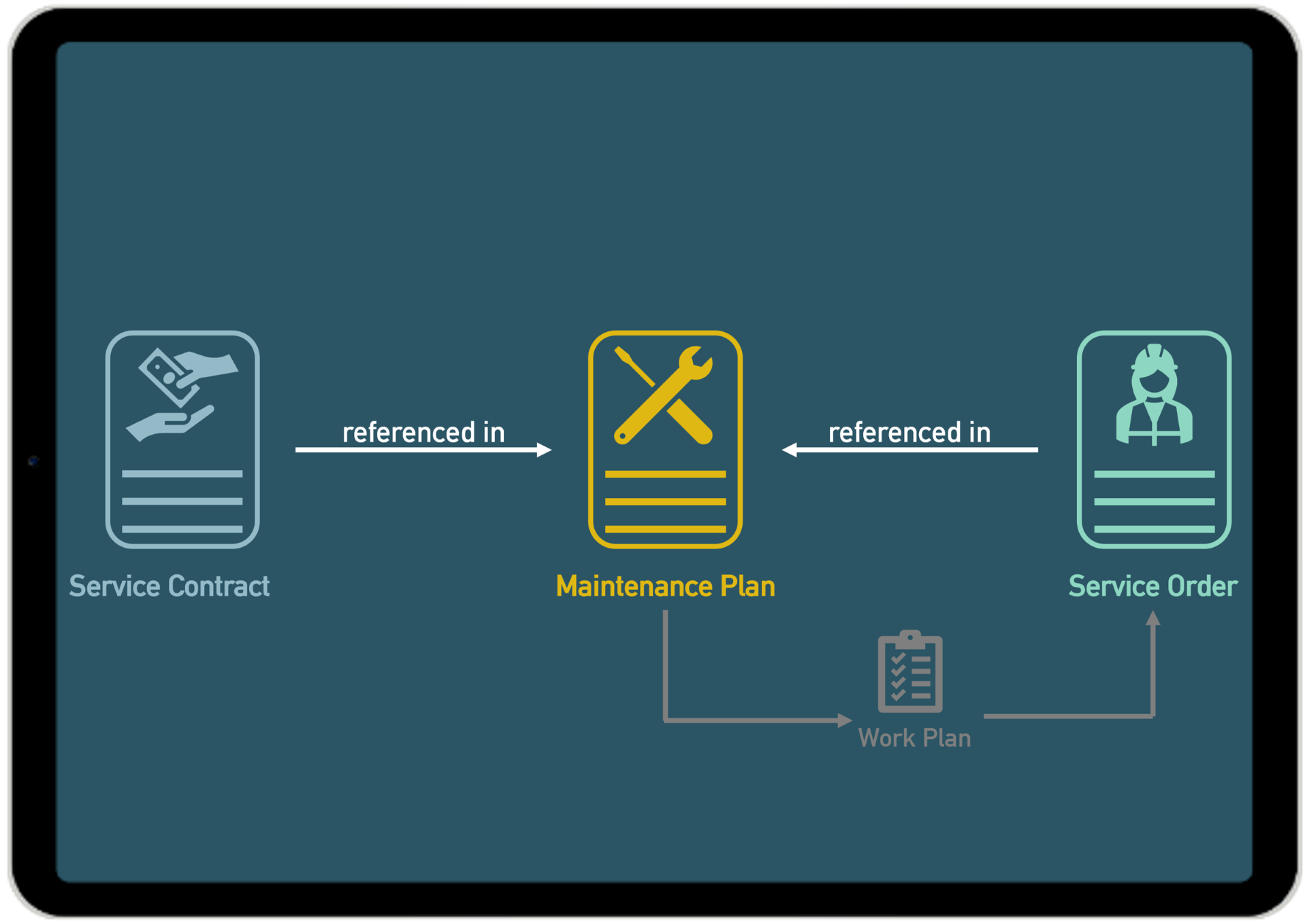
For recurring services, there are several elements in your SAP system that ensure a smooth process. One key element here is the service contract. In the service context, this serves as a higher-level element that defines the customer, the financial processing, and ultimately the scope of the service in terms of material and quantity. The service contract is then referenced in the corresponding maintenance plan. The plan defines the frequency of servicing, the equipment involved, and its location at the customer's site. When the maintenance plan is called up at regular intervals, a service order template is used, which is then converted into a service order. A task list recorded in the maintenance plan is transferred. This is ultimately processed and billed via the associated contract.
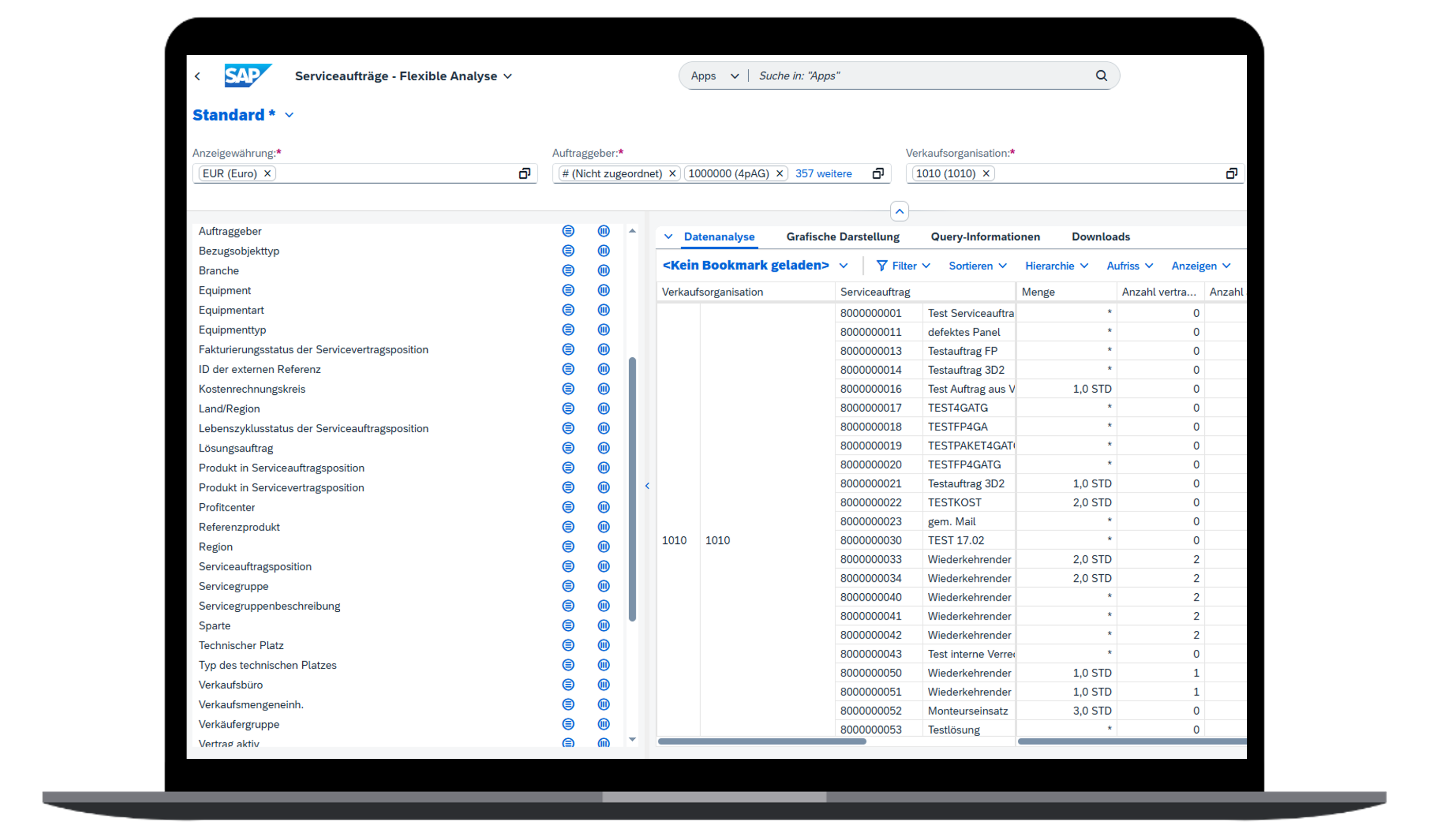
In SAP S/4HANA, intuitive evaluation tools help you maintain an overview of your service business and make informed decisions regarding your service strategy. SAP offers various standard solutions that allow you to create targeted reports with your desired parameters. There are apps for flexible analysis of service orders, service contracts, and customer returns. These allow you to select by client and sales organization and display relevant key figures in list form. On the left side of your screen, you will see a list of available fields. You can display these in your output with a click of the mouse. You can save views that have already been configured so that you can easily reuse them when needed. It is also possible to export created lists for further analysis. In addition to classic data analysis in the form of a list, you can also display a graphical representation of the relevant values.
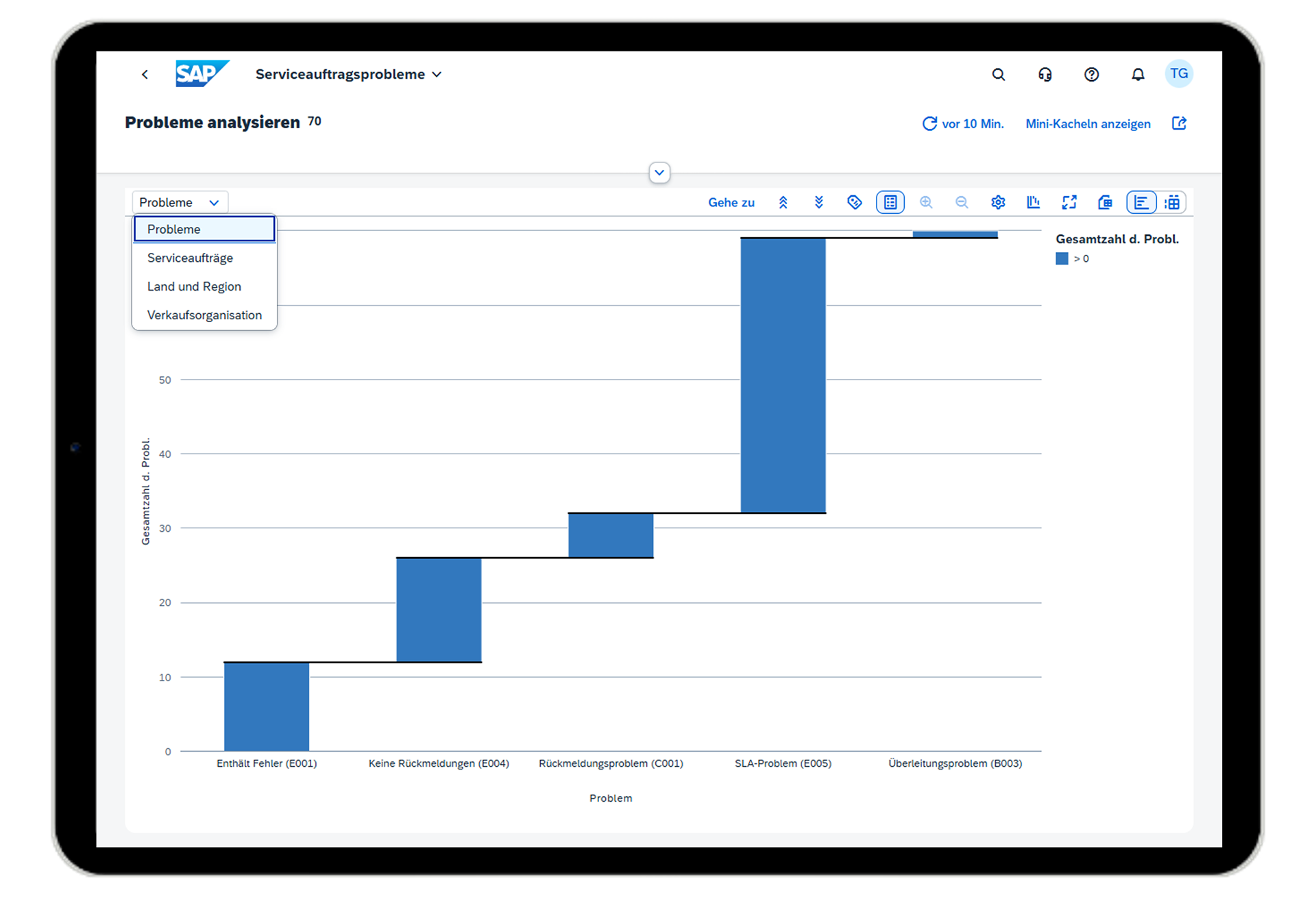
In addition, the service module provides you with apps for problem analysis in the context of orders and contracts. Here you get a clear graphical overview of the number of problems in different categories. For example, you can differentiate between SLA problems, feedback problems, and missing feedback. This app also provides you with ready-made views that you can use to break down your problems in the service business by country and region, for example.
You also have the option of creating custom queries. The “Custom Analytical Queries and Services” app is ideal for this purpose. It allows you to extract and process any data that is relevant to your service business and reflects your company-specific requirements. Ultimately, SAP not only provides you with assistance in service processing, but also supports you in making data-based strategic decisions and evaluating past service transactions.
Excellent customer service is a decisive factor for the satisfaction of your business partners. Field service in particular presents a number of major challenges. Among other things, you have to coordinate the working hours with the customer and also plan the arrival and departure of your service technician. You also need to ensure that your employee's day is filled as efficiently as possible with different types of assignments - taking into account various assignment priorities and deadlines. If the field service cannot be fully covered by internal capacities, it is also important to involve external service providers. Furthermore, material availability must always be guaranteed.
This is the only way the technician can ensure that the problem is solved immediately and avoid a follow-up assignment. Finally, structured deployment documentation should not be neglected. After all, this forms the basis for invoicing the customer. Appropriate software is required to combine these aspects in a targeted manner. With Field Service Management, SAP provides a solution that is intuitive to use and yet can map a very high degree of complexity. Get to know the intelligent planning tool and optimize your field service processes.
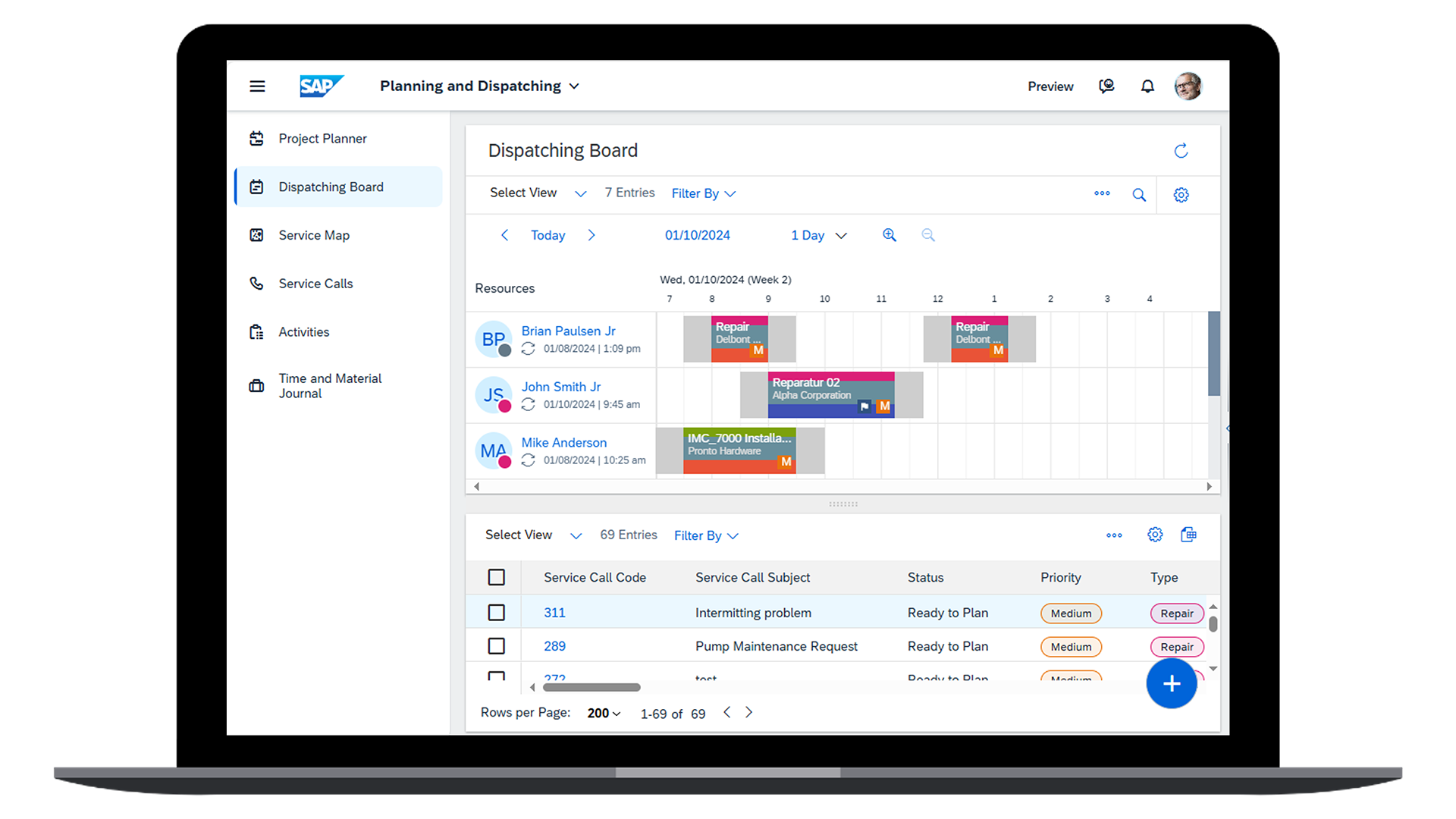
The central element of SAP Field Service Management is the intuitive planning board. Here you can see the calendars including the service assignments already scheduled for each service technician. You can simply drag and drop open assignments from the worklist into the planning board. As soon as these have been released, your employee receives a notification on the mobile app. This single point of truth enables a high level of transparency and thus facilitates communication with your stakeholders. You can also define milestones for large projects or define dependencies between different tasks. This provides additional structure to your daily work as an operations planner.
A major challenge in service processing is to map an end-to-end process. The solution is also suitable for this, as SAP's service solutions can be seamlessly integrated. While you interact with the customer via SAP Service Cloud V2, service order processing is managed in your S/4HANA system. Ultimately, on-site deployment planning and processing is seamlessly implemented via SAP Field Service Management.
When service demand fluctuates, it makes sense for many companies to involve external service technicians in addition to their own service team. This is also possible with the SAP solution. Service providers can register via a corresponding portal and then appear as a plannable resource in your planning board.
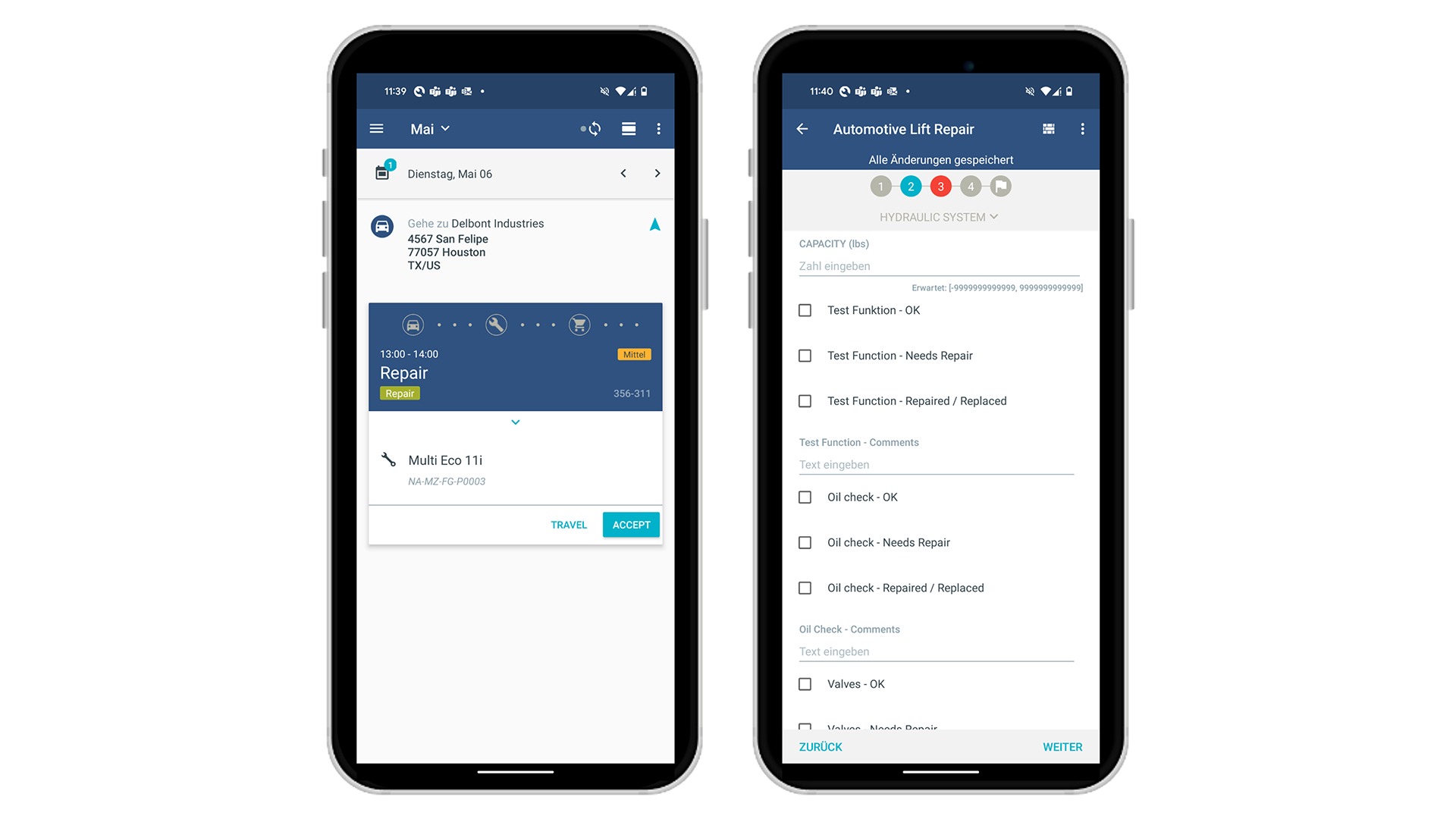
While you work as a deployment planner on the desktop, your service employees can work on site with a mobile application on a smartphone or tablet PC. After approval by the Field Service Manager, the assignment appears with all the information on the service technician's end device. They know when and where they need to be on site, what materials they need and what precautions they need to take in advance. Navigation to the destination is also possible in the app. As soon as they arrive on site, they can work through their work steps in the form of a checklist and have the customer's contact person sign the automatically generated digital service report at the end of the job. Times and other expenses can be recorded on an ongoing basis. These are then transferred to your S/4HANA system in the form of a time and material journal.
Above a certain number of assignments in a certain period of time and with a large number of available service technicians, it is a major challenge to achieve maximum efficiency when planning assignments. In many cases, it is even impossible without technical aids. For this reason, SAP Field Service Management makes use of AI to optimize your planning. This allows you to find the right specialist for your assignment in a matter of seconds - taking into account qualifications, location and availability. You can easily map your exact company-specific requirements using a no-code designer. Fully automated planning allows you to focus on the really important tasks in deployment processing. In addition to this approach, assisted planning is also possible. This suggests the optimum scheduling for individual service calls, for example.
In addition to the core product SAP Field Service Management, a wide range of enhancements are available to you. This allows you to map the specific requirements of your own service business in a targeted manner. In addition to an augmented reality tool, you also have extensions for remote support by your employees or for energy management, for example. Benefit from a mature ecosystem that has been created around the SAP Field Service Management application.
No. The SAP S/4HANA Service module is usually included in the standard SAP license and only needs to be set up. We are happy to assist you with technical questions or with basic customization.
No. The SAP S/4HANA Service module is only available on S/4HANA systems and serves as the successor to the previous SAP CS module, which SAP announced would be discontinued at the end of 2030. On an SAP ECC system, we recommend using the SAP CS module, which is usually included in your standard license scope.
The SAP Field Service Management solution offers a solution for mobile service calls. It includes a mobile app for technicians (online and offline), digital service reports, mobile time recording, photo documentation, and real-time resource planning using a planning board in the back office. SAP FSM can also be seamlessly integrated with S/4HANA Service.
SAP S/4HANA Service maps backend processes such as service orders, billing, and contracts.
SAP FSM complements this with mobile resource planning, technician dispatch control, and offline functionality for field service employees. Both solutions can be integrated, especially in a cloud context.
SAP S/4HANA Service is available both in the cloud (public edition/private edition) and on-premise. The cloud version offers more regular updates and innovations, while on-premise allows for more control over infrastructure and customizations. The choice depends on the IT strategy and requirements of the company. Feel free to contact us for more information!

Arrange your personal consultation now so that we can work together to develop a sound strategy. We would be happy to support you in designing and implementing your digitalization projects!