Controlling
Would you like to learn more?

Controlling is one of the cornerstones of operational accounting. While the other pillar, financial accounting, focuses on an external perspective, controlling targets internal processes, which is why it is also referred to as internal accounting. The interaction between these two fundamental components is of immense importance.
The results of controlling are intended to inform internal departments, such as management. It forms the basis for important management decisions. Since controlling is primarily designed for internal purposes, it is subject to less stringent legal regulations than financial accounting, which leads to greater flexibility in its design and does not entail any publication requirements. Our experts help your company achieve real added value by combining in-depth experience in business processes with technological expertise in SAP ECC and SAP S/4HANA.
Would you like to develop your employees in a targeted manner? Our comprehensive range of training courses in the area of controlling will support you in this. We offer practical training, provide targeted training for key users, and support you with customized training courses – tailored to your needs.
We view controlling as a service that can provide essential information to various departments:
The success of cost center accounting is measured by its transparency and completeness. All relevant information must be made available in order to make important decisions. It is also our job as controllers to provide the cost center managers with structured content for control purposes. Our experts are happy to advise and support you on all topics related to:
Under the motto “For every euro spent, two must be earned,” we consider creating transparency in purchasing to be one of the most important factors influencing improved contribution margins. We accompany you from conception to implementation and reporting. With SAP S/4HANA, you have the opportunity to make optimal use of self-service and exploit the full potential of your ERP system.
Projects, regardless of their size—whether organizing a trade fair or constructing an entire facility—require precise planning of all related activities. The project manager is responsible for the timely, cost-efficient, and performance-oriented execution of the project, and must optimally allocate the necessary resources and financial means.
Projects are usually integrated into a company's operational processes. In order to coordinate all tasks involved in project implementation, a project-specific organizational structure is required that is located between the departments involved. In order to implement a project holistically, it is necessary to clearly define the project goals and structure the necessary project deliverables. A clear and unambiguous structure is the basis for successful planning, monitoring, and control.
In the field of project management, a distinction is essentially made between the following types of projects:
Structured controlling in SAP PS makes it easier for you to achieve your project goals and maintain full control over the project process at all times. We take into account the most important commercial aspects of project controlling, from project planning to period-end closing and reporting.
Our support includes selecting the appropriate project structure, explaining the available planning tools, providing guidance on recording actual data, and how this data is posted in network plans, e.g., via purchase orders, production orders, or confirmations. We also help you with month-end activities such as determining results using “work in progress” and “percentage of completion” as well as overhead surcharges.
In times of increased competition and price pressure, the amount and composition of production costs are becoming increasingly important. Companies are looking for strategies to optimize these costs without compromising the quality of their products. In this context, product cost accounting in SAP ERP provides valuable support for companies that want to overcome these challenges.
Profitability and market segment accounting (CO-PA) supports sales controlling, which takes place in various areas of the company such as marketing or sales. Individual decision-makers have different requirements and objectives when evaluating the available data using KPIs, Fioris, CDS views, or standard evaluations. To ensure optimal decision support, reporting must be designed to meet the specific information needs of the respective decision-makers in their respective tasks and be transparent and accessible at all times.
In this context, various analytical applications are available to you, such as self-service with SAP Analytics Cloud Storytelling.
To achieve maximum benefit, it is crucial that your SAP system responds as precisely as possible to your individual requirements.
Profitability Analysis (CO-PA) enables you to analyze contribution margins for a market segment or strategic business unit (such as a sales organization or division). You can classify your market segments by product, customer, and order, or any combination thereof. This analysis provides sales, marketing, product management, and corporate planning with information for internal accounting and decision-making.
There are two types of profitability analysis:
Both approaches have advantages and disadvantages. When using SAP S/4HANA, margin analysis is recommended.
Feel free to contact us, we will help you make the right decision.
Profit center accounting often refers to a “company within a company.” The goal is to allocate costs and revenues across all stages of production to the respective profit centers. Until the introduction of S/4HANA, this was often a complex task and frequently led to customer-specific solutions in which profit centers had to readjust costs and revenues. SAP's new concept, including transfer prices and INTRA accounts, offers considerable simplification. We are happy to assist you in setting up reliable profit center reporting.
Overhead cost accounting includes cost type accounting, cost center accounting, internal orders, and occasionally project systems. Its purpose is to record costs as accurately and transparently as possible. The simpler and more transparent these processes are, the faster decision-makers in the company can act. We support you in developing concepts and implementing them in practice.
Production success depends on a variety of factors, including costs, time, quality, structure, and much more. Standard costing serves as a guideline, but deviations are crucial for analysis and control. Our focus is not only on the accuracy of planned costs, but rather on analyzing deviations in order to replicate positive effects and avoid negative ones. We would be happy to create a customized concept to establish transparent and reliable self-service reporting in your company.
Have you already defined your key performance indicators and made them available in the system at all times? Do you have a dashboard with KPI-based views tailored to the roles of your colleagues? We offer comprehensive support from conception to implementation.
Quality management (QM) and controlling ultimately pursue the same long-term goal: supporting management and executives to ensure long-term success and solid economic performance. Nevertheless, they have different focuses and approaches. Controlling often focuses on financial planning and management, while quality management aims to ensure that processes comply with established rules and that product quality is maintained.
The synergy between the two areas makes it possible to create the greatest added value for your company by combining efficient processes and appropriate control elements. Are you already able to transparently disclose and invoice your suppliers for all costs incurred due to insufficient quality? We are happy to assist you in implementing simple and effective solutions in your company.
SAP Plant Maintenance (SAP PM) is crucial for manufacturing companies. It enables the planning, execution, and documentation of maintenance measures, maintenance work, and repairs. Following the introduction of SAP S/4HANA, SAP PM was integrated into the extended SAP EAM (Enterprise Asset Management) module.
SAP PM offers central functions for managing and mapping activities such as inspections, notifications, maintenance, and repairs. This ensures control of the actual status of production facilities and maintenance of the defined target status. This minimizes downtime and reduces costs, as machines have a longer service life and require fewer spare parts.
We are happy to provide support in controlling, particularly in the areas of inventory management, performance assessment, evaluations, and monthly closings. Our top priority is to ensure simple and recipient-oriented processes. Our colleagues are ready to actively support you in process definition and implementation.
Process cost accounting is a supplement to traditional cost accounting in a company's accounting system. It focuses on internal processes and the associated costs of activities within the company. Process cost accounting can also be described as a combination of actual cost accounting and standard cost accounting on a full-cost basis.
We would be happy to discuss with you the options available for mapping full cost accounting in the system and why partial cost accounting is often a more transparent method of control.
In personnel controlling, you have various options for designing your reporting. This includes evaluations in the cost center area, which you can use to determine whether performance and costs are in line with your plans. In addition, we can provide you with evaluations containing sensitive HR data such as staff turnover, sick days, and more as KPIs in a self-service management dashboard. Would you like to post and analyze the springer cost center to other cost centers according to the source? Or are you planning a project for period-based posting of personnel expenses? Here, too, we are at your side from conception to implementation.
SAP offers a powerful tool called CATS (Cross-Application Time Sheet) for time recording. CATS enables employees to independently record their working hours with the appropriate account assignment elements as part of a self-service application. There are numerous personalization options that make time recording easy and clear for the end user. Alternatively, time recording can also be carried out centrally by one person for several employees.
The actual recording of working hours can be done via various interfaces. In addition to the classic GUI transaction, a user-friendly and modern Fiori app is now also available, which offers additional functions.
In the event that not all employees have an SAP license but still need to record their times independently via self-service, we offer an Excel-based solution. This solution provides each employee with a corresponding Excel document, which is imported into SAP in bulk at the end of the month. Checks for account assignment elements are also possible, and the connection of external systems can also be implemented.
As you can see, there are various solutions available for time recording. What all solutions have in common is that they use the same CATS customizing for the different approaches.
Actual time recording is the basis for cost center accounting and product cost controlling. This is an indispensable component for making a reasonable plan/actual comparison. With our expertise, we keep the additional effort for the end user low and increase transparency through numerous control options for your company.
One of the central tasks in controlling is planning, according to the motto: “No plan, no goal.” In this context, SAP provides a wide range of options to support your planning processes and thereby generate the highest possible added value for your company through improved transparency. We would be happy to advise you.
With predictive accounting, you can use current data from various areas in SAP S/4HANA, such as sales, integrated products such as SAP Concur, or external systems to predict future results at any time. This gives you a better understanding of how your accounting results might develop at the end of a current accounting period or quarter and why.
To briefly explain how predictive accounting works in the sales process: When a customer order is created, predictive accounting generates preview documents for the corresponding future goods issue and billing documents in a special extension ledger, the prediction ledger. This ledger structures the predicted results in a similar way to your actual posting data in the underlying ledger. These preview documents are created to predict what the actual posting documents for subsequent processes will look like. As the sales process progresses and real posting documents are created in the underlying ledger, the data in Predictive Accounting is updated in your Prediction Ledger by adjusting or canceling the amounts in the preview documents.
Using the entries in the prediction ledger and the actual data from the underlying ledger, you can forecast future key figures, such as sales revenue for a product. You can display and analyze individual items for a product in a report. You can also view the data at a more detailed or aggregated level, such as in a balance sheet or income statement. All entries, both actual and predicted, are stored in one central location: the comprehensive journal. This allows you to navigate from your income statement or balance sheet to the individual accounting documents in the general ledger and view the corresponding line items.
Cost center planning is a powerful and reliable process that can already be used effectively in SAP ECC. From service planning to service delivery to cost planning, plan integration, plan allocations, and settlements, everything works smoothly and reliably. When we look for ways to improve, the focus is often on usability, which is sometimes not optimally solved. In this context, 4process AG offers various solutions that are outstanding in terms of both functionality and user-friendliness. Please do not hesitate to contact us.
Profitability and market segment accounting has undergone a significant change with SAP S/4HANA. Margin analysis (accounting CO-PA) lays new foundations for planning. Have you already carried out CO-PA planning at account level in your system and automatically taken the costs of sales into account? Is there perhaps a need to determine secondary requirements, and are you interested in coordinating sales planning and cost center performance planning?
We offer comprehensive support from conception to implementation. Don't hesitate to contact us.
Are you looking for a central application for your investment planning?
Would you like to evaluate different investment budgets in your SAP system by category (e.g., training budget, development projects, etc.)?
Would you like to be able to evaluate the status of your investments at any time?
Are you tired of maintaining and approving your investment plans multiple times?
Have you wondered how other companies manage their investments?
We are happy to support you with your individual solution using SAP IM.
The SAP Project System is a powerful module that can map a wide range of project requirements in the system. It enables both complex and simple requirements to be mapped in a structured and straightforward manner. Depending on individual needs, various solutions are available, including cost-type planning, component planning, budgeting, and integrated planning via deployment components and associated production orders. We look forward to working with you to develop the optimal solution for your specific requirements.
The calculation can be used in a wide range of applications, whether as a basis for evaluating materials (standard calculation) for pricing in sales, for determining minimum values, for production control, and in many other contexts. Depending on the specific requirements, compliance with legal requirements, the definition and implementation of processes, and the consideration of different requirements are necessary. These processes can be executed automatically, manually, or in parallel. Our experts are happy to support you from conception to setup.
Determining the calculation lot size plays a crucial role in cost estimation and price determination. For example, it determines how many units the setup costs are distributed across, which in turn can have a significant impact on the final price. It is therefore very important to determine the most accurate calculation lot size possible for the materials. This process usually requires a considerable amount of manual effort. For this reason, we have developed an advanced program that automatically determines the optimal calculation lot size and stores it directly in the material master.
This solution provides transparency and enables detailed tracking by revealing how the specific batch size was calculated and which data was used as a basis. If the system is unable to determine the optimal size for some materials, it is possible to edit them manually and assign user-defined values. Through integration with the Closing Cockpit, the calculation batch size can be seamlessly incorporated into the monthly closing process, ensuring a structured, reliable approach.
If you have previously determined the calculation batch size manually or if this process has been neglected, our tool offers an efficient and time-saving alternative.
SAP S/4HANA Finance opens up new ways to make reporting more informative and flexible. This enables finance and controlling to position themselves more strongly as business partners. To get the most out of S/4HANA, it is crucial to consider what information and data are relevant to the respective business model and how they can support management decisions. Since S/4HANA also includes areas such as logistics, it provides a solid foundation for consistent, company-wide reporting. To take full advantage of these opportunities, the first step for many companies is to analyze which data should be evaluated and used for corporate management.
Have you successfully implemented SAP S/4HANA and now want to leverage the full potential of your system in the area of analytics and reporting?
With SAP S/4HANA, you can access numerous preconfigured reports, define independent data models with CDS views, and visualize the evaluations in KPIs or other analytical dashboards. It is also possible to systematically bundle evaluations into roles, thereby creating real added value for users.
Regardless of the current stage of development in the area of planning and analytics, it is always individual strategies that are defined and established for your company in order to deliver long-term added value. Arrange your individual consultation now so that we can work with you to define a sound strategy. We would be happy to support you in implementing your projects!
Please also note our training offerings in the area of SAP S/4HANA embedded analytics.
Predictive analytics is one of the leading trends in our fast-paced world. With the help of historical data and statistical methods, it is possible to predict behaviors and values with a certain degree of probability. We would be happy to inform you about how predictive analytics can significantly improve your controlling.
We are happy to assist you in setting up interfaces for master and transaction data, which are required for calculations or contribution margin accounting in SAP, for example. Our tool offers an elegant solution for communication with external systems, including error handling and follow-up. We support you in both business processes and individual logic in order to adapt the data to SAP's standard processes as needed. This allows us to reduce manual maintenance to a minimum. As a result, you can, for example, perform calculations and evaluate the contribution margin using standard SAP evaluations. This can be done using conventional KE30 reports as well as comprehensive queries and analysis tools. We would be happy to work with you to develop a suitable solution.
How fast and efficient is your monthly closing process right now? Have you already documented and automated your monthly closing processes? SAP offers various solutions to simplify these and many other aspects and enable fast monthly closing. We are happy to help you make your monthly closing as easy and time-saving as possible.
Due to government regulations and social and economic developments, companies are facing growing demands with regard to sustainable entrepreneurship.
To help your company meet these demands as efficiently and successfully as possible, SAP offers a wide range of sustainability solutions.
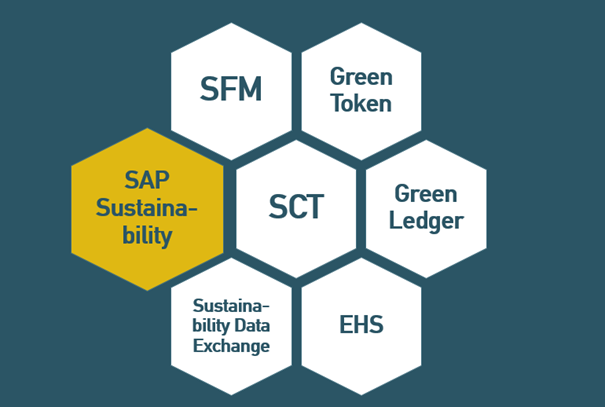
SCT offers a solution for monitoring, designing, and planning your overall sustainability performance, taking legal requirements into account. A wide variety of reporting KPIs and reports, as well as simulations and scenario analyses, can be used for this purpose. In addition, the complex ESG reporting process is simplified by ready-made reports.
SFM enables you to calculate and communicate your overall sustainability performance. It provides emission factors for your products and value chains, taking into account all input materials, production, transport, and energy costs. SAP SFM enables you to compare and improve your products based on their environmental impact by analyzing and evaluating alternative materials and manufacturing methods. SFM allows you to integrate it into other SAP sustainability solutions as well as into your operational processes (CO₂ footprint in orders, material evaluations).
SAP Green Token is used for supply chain traceability of raw materials or products (e.g., steel, palm oil, aluminum, etc.) in mixed products. Green tokens are digital proofs of origin that use blockchain technology to ensure traceability and transparency of the raw materials contained in mixed products (e.g., rubber). SAP Green Token can be integrated with other SAP systems to support automatic data collection and transfer, among other things. Furthermore, SAP Green Token supports you in complying with regulatory requirements (e.g., EU Green Deal, Supply Chain Act) and ESG reporting. The secure sharing of token data with suppliers, customers, or authorities enables collaborative sustainability management across company boundaries.
Essentially, the Green Ledger is an accounting record of emissions data linked to financial data. The focus is on transaction-related CO² accounting. This means that emissions generated by products and services along the value chain are measured, tracked, and reported on a transaction-by-transaction basis. Accordingly, the Green Ledger combines data flows from the financial accounting system and ESG solutions. Central to this is SAP SFM, which calculates the CO² footprint at the company and product level and assigns the emissions data to the transaction and master data records of your ERP system.
SAP EHS supports you in managing and optimizing environmental, health, and safety processes and the associated legal requirements. This includes the following areas:
With sustainability solutions such as SAP SCT, SAP offers a good and comprehensive product that makes it easier for companies to meet legal requirements and report sustainability data in a standardized form. However, there are no guidelines for data collection to present relevant KPIs in reporting. Based on the current SAP solutions, we have considered how we can supplement SAP's solutions in order to facilitate data collection on the one hand and integrate sustainability issues into our customers' processes on the other.
On the one hand, we enable our customers to obtain data as easily as possible through technical implementations and automation (e.g., using customizing tables). On the other hand, we offer business consulting and support to make your operational processes and business data individually usable for your sustainability reporting.
Arrange your personal consultation now so that we can work together to develop a sound strategy. We would be happy to support you in designing and implementing your digitalization projects!